


Let's Answer All the Questions You Have About Your Healthcare Records. Article 2 Blog Series

Article 2
FAQ: "Can I Correct My Medical Record?"
Short Answer: Yes. Under federal privacy laws like HIPAA (Health Insurance Portability and Accountability Act), you have a legal right to review your medical records and request corrections or amendments if you find inaccurate or incomplete information.
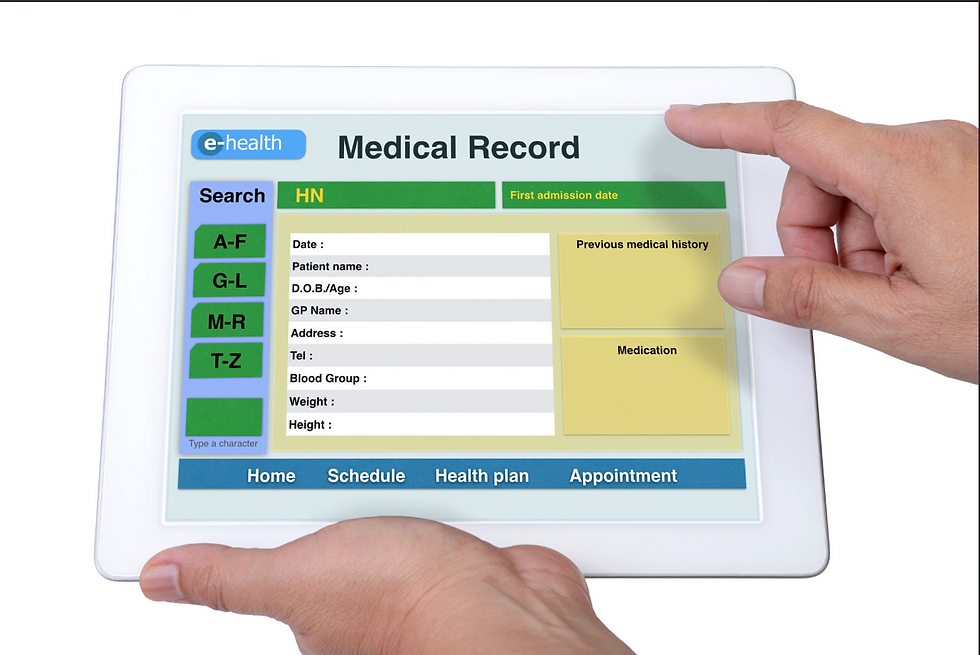
Managing patient records digitally.
What Can You Request to Correct?
Healthcare organizations handle data correction requests regularly. Patients can request updates or changes for several types of information:
Demographic Information: Correcting misspelled names, updating physical or mailing addresses, phone numbers, email addresses, and preferred contact preferences.
Legal Name & Identity Changes: Updating records to reflect legal name changes following marriage, divorce, or court orders.
Billing & Insurance Details: Adjusting primary/secondary coverage details, subscriber IDs, or guarantor information.
Factual & Clinical Errors: Fixing incorrect dates of service, inaccurate medication dosages, missing allergy warnings, or clinical notes filed under the wrong patient profile.
What Happens After You Submit a Request?
Once you submit a formal request for amendment, the organization’s Health Information Management (HIM) or Medical Records department initiates a structured review process. Under HIPAA rules, covered entities typically have 60 days to respond to your request (with a potential 30-day extension if they inform you in writing).
The health system will evaluate the request and choose one of three potential outcomes:
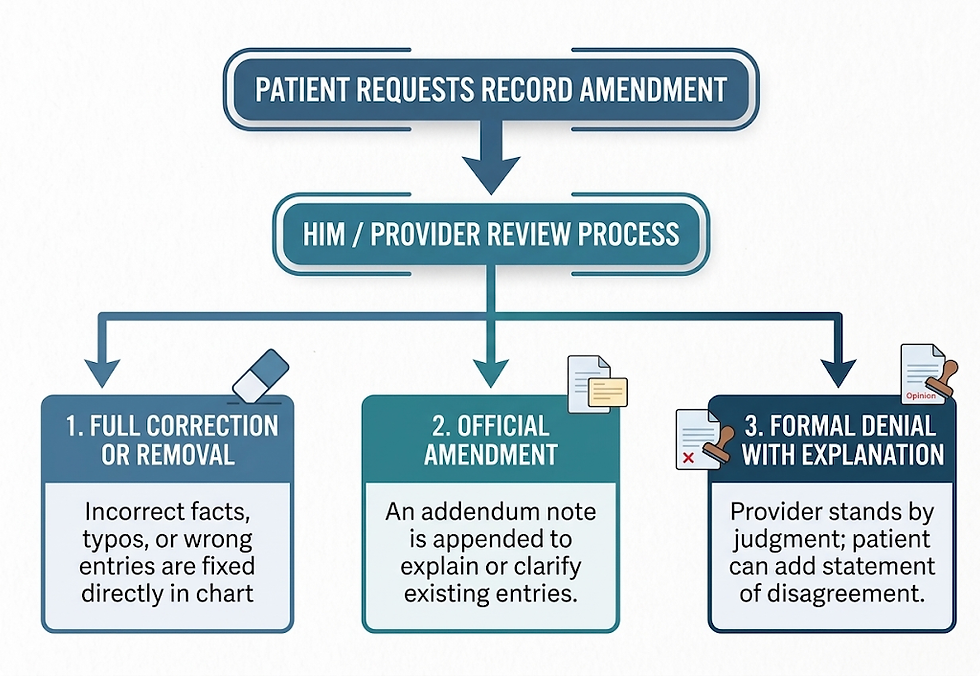
Direct Correction: Straightforward factual errors (such as wrong demographic data or miskeyed numbers) are corrected directly in the electronic health record (EHR).
Official Amendment / Addendum: Original clinical entries generally cannot be completely deleted or erased due to legal medical-record retention requirements. Instead, the provider attaches an official addendum clarifying or updating the entry.
Formal Denial with Explanation: If the provider determines that the existing record is accurate, was created by another facility, or reflects a valid professional opinion, they may deny the request. They must provide a written explanation outlining the reasons for denial and instructions on how to submit a formal Statement of Disagreement to be placed in your chart.
Best Practices for Submitting a Correction Request
To ensure your request is processed efficiently, follow these best practices:
Use Official Channels: Request the facility's official Patient Amendment Request Form through their HIM/Medical Records department or online patient portal.
Be Specific: Clearly state the exact date of service, document name, provider, and section you are asking to change.
Provide Supporting Documentation: Include relevant supporting documents whenever possible (e.g., driver's license for name changes, insurance card, or external lab reports).
Keep Personal Records: Retain a copy of your submitted request, timestamps, and any correspondence for your personal files.
Have a question about your healthcare record? You're not alone. Understanding your health information is an important part of managing your care. This series is designed to help patients navigate common concerns, understand their rights, and know where to turn when something doesn't seem right.


Comments